
If you’re a Brisbane homeowner planning a kitchen or bathroom renovation, choosing the right stone benchtop can make all the difference. Stone benchtops are more than just a stylish feature – they’re a practical investment in your home’s value, durability, and everyday liveability. But with so many types available, making the right choice can feel overwhelming, especially with the unique climate and lifestyle factors in South East Queensland.
This guide will walk you through the main types of stone benchtops you’ll find in Brisbane homes. We’ll cover key pros and cons, real-world performance, and what to consider for local conditions. You’ll also get practical advice on choosing the perfect surface for your renovation, plus answers to common questions Brisbane renovators ask.
Let’s dive in and help you find the stone benchtop that fits your space, your style, and your Queensland way of life.
Why Stone Benchtops Remain A Top Choice In Brisbane
Stone benchtops have a reputation for timeless appeal and hard-wearing performance. In Brisbane, their popularity has only grown due to a few key reasons:
-
Resilience: Stone stands up to heat, spills, and knocks – essential for busy family kitchens.
-
Visual impact: Stone surfaces instantly add a sense of luxury and quality.
-
Value: Homes with stone benchtops often achieve higher resale prices.
-
Low maintenance: Many types are easy to clean, saving time for busy Brisbane families.
-
Climate suitability: Stone copes well with the humidity and temperature swings common in South East Queensland.
But not all stone benchtops are the same. Each material has its own strengths, weaknesses, and ideal uses. Understanding these differences will help you avoid costly mistakes and choose a surface that looks beautiful for years to come.
Natural Vs Engineered Stone: Key Differences
Before we dive into specific materials, it’s important to know the two main categories of stone benchtops:
-
Natural stone: Mined from the earth, cut, and polished. Each slab is unique.
-
Engineered stone: Manufactured from crushed stone (like quartz), mixed with resins and pigments.
Both types offer stunning looks, but their performance and maintenance needs can be quite different. For Brisbane homes, your choice will come down to style, budget, and how you use your space.
Here’s a quick comparison to get you started:
|
Feature |
Natural Stone |
Engineered Stone |
|---|---|---|
|
Appearance |
Unique veining, one-of-a-kind |
Consistent colour, wide design choices |
|
Durability |
Very strong, but porous |
Highly durable, less porous |
|
Maintenance |
Needs sealing, can stain |
Low maintenance, easier to clean |
|
Cost |
Mid to high |
Mid to high |
|
Heat & UV Resistance |
Excellent |
Good, but some fade with strong sun |
Now, let’s look at the most popular types of stone benchtops you’ll see in Brisbane homes.
The Main Types Of Stone Benchtops
Granite Benchtops
Granite is one of the most recognised natural stones used for benchtops in Australia. It’s mined from quarries and cut into slabs, each with its own unique pattern.
Strengths:
-
Extremely hard-wearing: Nearly scratch-proof and heat resistant.
-
Natural beauty: No two slabs are exactly the same.
-
Excellent for outdoor kitchens: Handles Brisbane’s strong sun and humidity well.
Weaknesses:
-
Needs regular sealing: Granite is porous and can stain if not sealed.
-
Some colours are pricey: Rare colours and patterns cost more.
-
Seams can be visible: Large kitchens may require joins.
Best for: Homeowners wanting a natural, luxurious feel, especially in high-traffic kitchens.
Local tip: If your kitchen gets a lot of sunlight, granite holds its colour and won’t fade like some engineered stones.
Marble Benchtops
Marble is famous for its classic veined look and has long been a favourite in prestige homes.
Strengths:
-
Stunning appearance: Instantly lifts any kitchen or bathroom.
-
Cool to the touch: Great for pastry making and rolling dough.
-
Adds value: Seen as a luxury feature in Brisbane’s property market.
Weaknesses:
-
Soft and porous: Scratches and stains more easily than granite or engineered stone.
-
High maintenance: Needs sealing every 6–12 months.
-
Etching risk: Acidic foods (like lemon juice) can dull the surface.
Best for: Showpiece kitchens or bathrooms with lower use, or homeowners who don’t mind regular maintenance.
Local tip: Brisbane’s humidity can encourage mould in porous stones like marble, especially around sinks. Good ventilation is a must.
Quartz (engineered Stone) Benchtops
Quartz benchtops (also called engineered stone) are made from around 90% crushed stone and 10% resin and pigments. Brands like Caesarstone, Essastone, and Smartstone are common in Brisbane.
Strengths:
-
Very durable: Resists stains, scratches, and chips.
-
Easy maintenance: No sealing required.
-
Consistent colour: Easy to match across large spaces.
-
Many design options: Mimics marble, granite, concrete, and more.
Weaknesses:
-
Can fade outdoors: Not always UV stable, so not ideal for outdoor kitchens.
-
Heat damage possible: Hot pots can mark the surface.
-
Silica dust risk: Cutting engineered stone creates fine dust, so only use certified installers.
Best for: Busy Brisbane kitchens, families, and anyone wanting a modern, low-fuss benchtop.
Local tip: Always check your warranty – some brands offer up to 15 years’ coverage, but only with professional installation.
Porcelain Benchtops
Porcelain benchtops are a newer arrival in Australian homes but are growing fast due to their unique benefits.
Strengths:
-
Ultra-strong: Highly resistant to scratches, stains, and chemicals.
-
Heat and UV proof: Perfect for outdoor kitchens and BBQ areas.
-
Thin profiles available: Sleek, modern look.
Weaknesses:
-
Chipping on edges: Can be brittle if knocked on corners.
-
Limited edge profiles: Some styles are harder to achieve.
-
Higher cost: Premium material, especially for large surfaces.
Best for: Open-plan homes, alfresco kitchens, and those wanting the latest in benchtop technology.
Local tip: Porcelain is ideal for Brisbane’s indoor-outdoor living, as it doesn’t fade or warp in the sun.
Quartzite Benchtops
Quartzite is a natural stone, not to be confused with engineered quartz. It’s formed from sandstone under heat and pressure, making it both beautiful and tough.
Strengths:
-
Looks like marble, but harder: Offers a similar veined appearance.
-
Good stain resistance: Less porous than marble.
-
Handles heat well: Great for serious cooks.
Weaknesses:
-
Still needs sealing: Not as maintenance-free as engineered stone.
-
Limited supply: Less common, so expect to pay more.
-
Colour variation: Each slab is unique – harder to match.
Best for: Homeowners who want marble’s look without its drawbacks, and are happy with a higher price point.
Local tip: Ask your supplier for full slabs, not just samples, as colour and veining can vary dramatically.
Soapstone Benchtops
Soapstone is a lesser-known natural stone, but it has a loyal following among renovators seeking a soft, matte look.
Strengths:
-
Non-porous: Naturally resists stains without sealing.
-
Soft, tactile feel: Warm to the touch.
-
Develops patina: Gains character over time.
Weaknesses:
-
Scratches easily: Not as tough as granite or quartz.
-
Limited colours: Mostly greys and greens.
-
Higher cost: Import costs make it pricey in Australia.
Best for: Character homes, rustic kitchens, or those wanting something unique.
Local tip: Soapstone’s resistance to acids makes it great for food prep areas, but Brisbane’s high humidity can darken the stone more quickly.
Travertine Benchtops
Travertine is a sedimentary stone with a warm, earthy look. It’s less common for benchtops but is sometimes used for bathroom vanities or feature bars.
Strengths:
-
Distinctive appearance: Creams, beiges, and soft browns.
-
Natural warmth: Softer feel than granite or quartz.
-
Non-slip surface: Useful in wet areas.
Weaknesses:
-
Very porous: Needs regular sealing, can stain easily.
-
Not as durable: Softer, more prone to chips and scratches.
-
Can discolour: Especially in kitchens with lots of red wine or coffee.
Best for: Bathrooms, feature walls, or low-use benchtops.
Local tip: In Brisbane’s humid climate, travertine is best for vertical surfaces or rooms with excellent ventilation.
Limestone Benchtops
Limestone is another natural stone with a soft, organic look. It’s sometimes used in high-end Brisbane homes for bathrooms or light-use kitchens.
Strengths:
-
Elegant, understated look: Pale creams and greys suit coastal homes.
-
Cool surface: Comfortable during hot Queensland summers.
Weaknesses:
-
Very porous: Stains easily, even with sealing.
-
Softness: Scratches, chips, and etches easily.
-
High maintenance: Needs regular attention.
Best for: Bathrooms or gentle-use kitchens, especially in homes with a classic or coastal style.
Local tip: Not recommended for families or heavy cooks – it’s more decorative than practical in most Brisbane homes.
Onyx Benchtops
Onyx is a rare, semi-precious stone often used for feature panels or luxury bars.
Strengths:
-
Striking appearance: Translucent, can be backlit for a dramatic effect.
-
Unique patterns: Every slab is a statement piece.
Weaknesses:
-
Very soft: Scratches and chips easily.
-
Expensive: One of the highest-priced options.
-
Not practical for kitchens: Best for low-use areas.
Best for: Bars, feature splashbacks, or showpiece vanities.
Local tip: Consider onyx for a wow-factor bar in your Brisbane home, but not for workhorse kitchen surfaces.
Terrazzo Benchtops
Terrazzo is made from chips of marble, quartz, granite, or glass set in cement or resin. It’s become trendy in Brisbane for its playful, mid-century look.
Strengths:
-
Highly customisable: Choose colours and chip sizes.
-
Durable: Resistant to most stains and scratches if properly sealed.
-
Eco-friendly options: Some brands use recycled materials.
Weaknesses:
-
Sealing needed: Cement-based terrazzo is porous.
-
Can crack: If not installed correctly.
-
Cool, hard surface: May not suit every taste.
Best for: Modern kitchens, bathrooms, or anyone wanting a retro vibe.
Local tip: Look for terrazzo made with resin, not just cement, for a more water-resistant and stable benchtop in humid Brisbane homes.
Less Common Stone Benchtop Materials
While the above are most popular, you may also come across:
-
Slate: Dark, rustic, and slip-resistant. Rare for benchtops but sometimes used in older Brisbane homes.
-
Basalt: Hard, volcanic stone with a charcoal look.
-
Bluestone: Seen in some industrial or outdoor spaces.
These options are more niche but may appeal to renovators wanting something truly different.
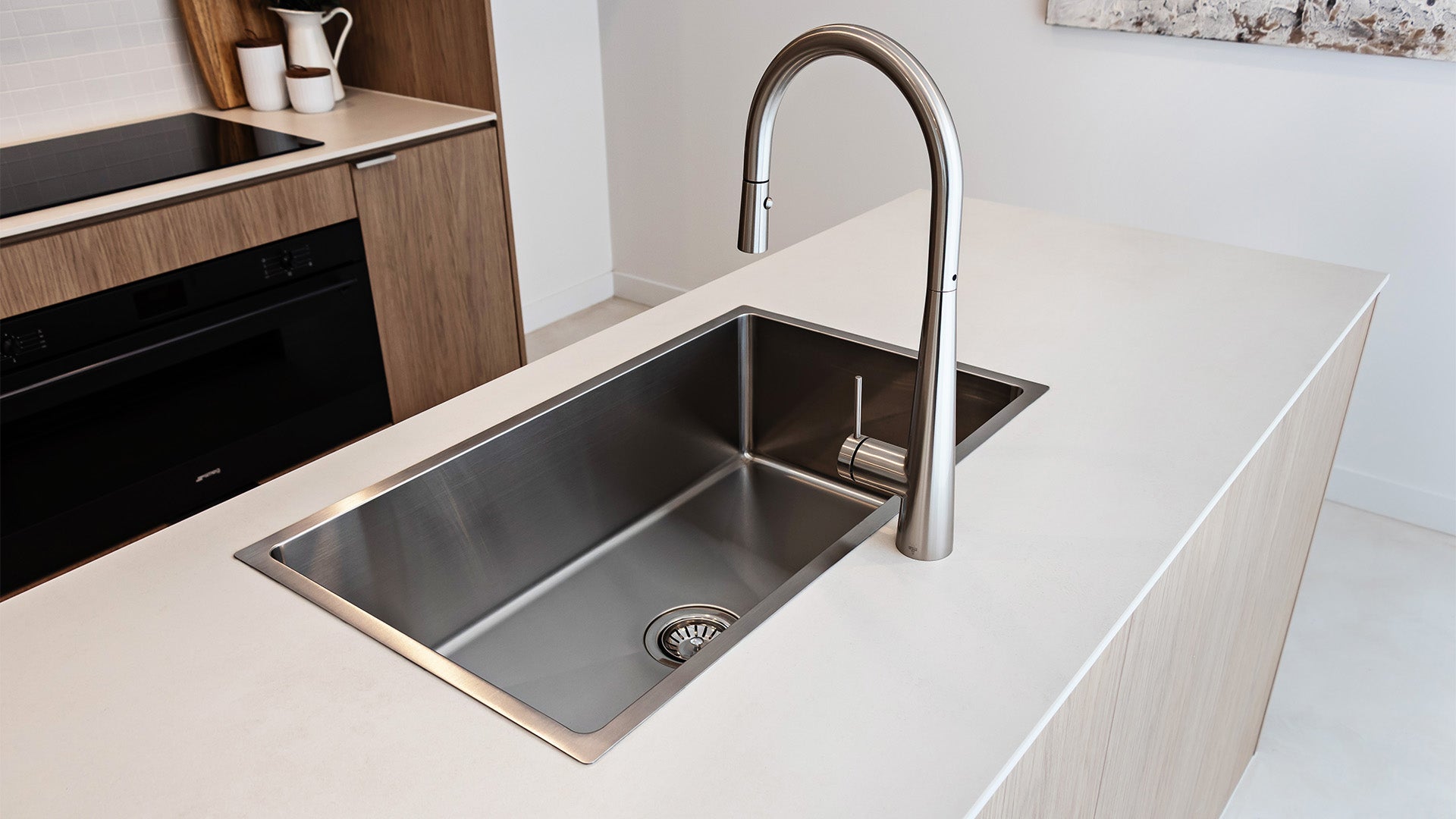
Credit: www.cookandbathe.com.au
Comparing Stone Benchtop Performance
Choosing a benchtop isn’t just about looks. Here’s a performance comparison of the main materials, tailored for Brisbane conditions:
|
Material |
Heat Resistance |
Stain Resistance |
UV Resistance |
Maintenance Needs |
|---|---|---|---|---|
|
Granite |
Excellent |
Good (with sealing) |
Excellent |
Moderate |
|
Marble |
Good |
Fair |
Excellent |
High |
|
Quartz (engineered) |
Good |
Excellent |
Fair |
Low |
|
Porcelain |
Excellent |
Excellent |
Excellent |
Low |
|
Quartzite |
Excellent |
Good (with sealing) |
Excellent |
Moderate |
Two insights Brisbane homeowners often miss:
-
Outdoor living requires UV resistance: Not all stone is suitable for alfresco kitchens. Porcelain and granite hold up best in full sun.
-
Humidity affects maintenance: Porous stones like marble, limestone, and travertine need extra attention in Brisbane’s climate to prevent mould and discolouration.
What To Consider When Choosing A Stone Benchtop In Brisbane
A beautiful benchtop is only the start – it needs to fit your lifestyle and Brisbane’s environment. Here’s what matters most:
1. Usage Patterns
-
Do you cook daily, or is your kitchen more for show?
-
Families with kids need tough, stain-resistant surfaces (think quartz or granite).
-
Entertainers might want a wow-factor stone in the bar or servery.
2. Indoor Vs Outdoor
-
Outdoor kitchens need UV and weather-resistant stone.
-
Quartz and marble often fade or degrade outside – granite or porcelain perform better.
3. Maintenance Commitment
-
Some stones need regular sealing and gentle cleaning.
-
If you want to “set and forget,” engineered quartz or porcelain are best.
4. Budget
-
Natural stone can range from $600 to $2,000+ per square metre installed in Brisbane.
-
Engineered stone starts around $500 per square metre, but premium brands cost more.
-
Don’t forget to budget for installation, edge profiles, and cut-outs for sinks and appliances.
5. House Style And Resale Value
-
Classic Queenslanders suit marble or limestone.
-
Modern homes look great with engineered quartz or terrazzo.
-
Stone benchtops are a big selling point in Brisbane’s competitive property market.
6. Sustainability
-
Eco-friendly options include terrazzo with recycled glass or locally-sourced stone.
-
Check for GreenTag or GECA certification if sustainability is a priority.
7. Installation Expertise
-
Only use licensed, experienced stone fabricators.
-
Poor installation leads to cracking, poor joins, and voided warranties.
-
For engineered stone, ensure compliance with Queensland’s strict silica safety laws.
Practical Tips For Getting The Best From Your Stone Benchtop
-
Always view the actual slab, not just a sample. Stone can look very different in large pieces.
-
Ask about warranty and after-sales support – especially for engineered surfaces.
-
For busy kitchens, choose a honed or matte finish to hide fingerprints and minor scratches.
-
Use cutting boards and trivets, even on tough stones, to maximise benchtop life.
-
Clean up spills quickly, especially wine, coffee, and acidic foods.
-
For outdoor kitchens in Brisbane, insist on UV-resistant stones and professional sealing.
Common Mistakes Brisbane Renovators Make
-
Choosing marble for a busy family kitchen, then regretting stains and etching.
-
Installing engineered stone outdoors, only to see it fade after one summer.
-
Neglecting sealing schedules, leading to permanent stains in porous stones.
-
Not allowing for stone thickness and weight in cabinetry design.
-
Trying to save on installation by using unlicensed trades – risking damage and safety issues.
Stone Benchtop Trends In Brisbane Right Now
The Brisbane market is seeing a few clear trends in 2024:
-
Light neutrals: White and pale grey stones make kitchens feel bigger and brighter.
-
Bold veins: Dramatic marble-look quartz and quartzite are in demand.
-
Outdoor living: Porcelain and granite are top picks for BBQs and alfresco areas.
-
Thin profiles: Sleek, 12mm porcelain slabs for a modern edge.
-
Sustainability: Recycled terrazzo and Australian-sourced stone gaining popularity.
Whether you’re renovating a classic Queenslander or building a new home in one of Brisbane’s growth suburbs, there’s a stone benchtop style that will suit your vision and add long-term value.
Cost Comparison: Stone Benchtop Types In Brisbane
Here’s a quick look at typical installed prices per square metre for each material in Brisbane (2024 estimates):
|
Stone Type |
Typical Price (per m2) |
Maintenance Level |
|---|---|---|
|
Engineered Quartz |
$500 – $1,200 |
Low |
|
Granite |
$600 – $2,000 |
Moderate |
|
Marble |
$800 – $2,500 |
High |
|
Porcelain |
$1,000 – $2,000 |
Low |
|
Quartzite |
$1,200 – $2,500 |
Moderate |
|
Terrazzo |
$800 – $1,800 |
Moderate |
Prices vary based on colour, slab size, edge detail, and installation complexity. Always get a detailed quote from a local Brisbane stone supplier.
Where To See And Buy Stone Benchtops In Brisbane
You don’t have to rely on online images alone. Some of the best places to view and select stone benchtops in Brisbane include:
-
Stone warehouses: See full slabs and talk to experts at large showrooms.
-
Kitchen and bathroom showrooms: View installed displays for inspiration.
-
Fabricators’ workshops: Get advice on edge profiles, sinks, and installation.
-
Home shows: Annual events like the Brisbane Home Show feature the latest trends.
Look for suppliers who provide samples, clear quotes, and strong after-sales service. Always ask about local installation experience – Brisbane’s humidity and building codes require special know-how.
Stone Benchtop Care And Maintenance
Even the toughest stone needs some TLC. Here’s how to keep your Brisbane benchtop looking its best:
-
Daily cleaning: Wipe with a damp cloth and mild detergent.
-
Avoid harsh chemicals: Steer clear of bleach or acidic cleaners.
-
Re-seal natural stone: Follow your supplier’s schedule (often every 6–12 months).
-
Attend to chips and scratches: Minor damage can often be repaired by a professional.
-
Check for mould: In humid Brisbane kitchens, inspect grout lines and edges regularly.
A well-cared-for stone benchtop can last decades – and still look as good as new when you decide to sell.
The Bottom Line
Stone benchtops remain one of the best ways to add value, style, and functionality to Brisbane homes. With options from granite and marble to engineered quartz and porcelain, there’s a surface for every taste, budget, and lifestyle. By understanding the differences, seeing real slabs in person, and working with experienced local professionals, you can enjoy a benchtop that not only looks stunning, but also stands up to Queensland’s unique climate.
Ready to take the next step? Talk to a trusted Brisbane stone supplier or kitchen renovator, and see just how much a new benchtop can transform your space.
For more in-depth information about stone types and their properties, visit the Wikipedia Countertop Guide.
Frequently Asked Questions
What Is The Most Durable Stone Benchtop For Brisbane Kitchens?
Granite and porcelain are the top performers for durability, handling heat, scratches, and Queensland’s humidity with ease. Engineered quartz is also very tough but less suited to outdoor areas.
Can I Use Marble For My Kitchen Benchtop In Brisbane?
You can, but be aware that marble is porous and can stain or scratch easily, especially in busy family kitchens. It’s best for bathrooms or showpiece islands where maintenance is less demanding.
Are Stone Benchtops Suitable For Outdoor Kitchens In Brisbane?
Yes, but choose carefully. Granite and porcelain are best for outdoor use, as they withstand UV rays and rain. Avoid engineered quartz and marble outside – they may fade or weather badly.
How Often Do I Need To Seal A Stone Benchtop?
Natural stones like granite, marble, and quartzite should be sealed every 6 to 12 months. Engineered stones and porcelain do not need sealing, making them lower maintenance for busy Brisbane households.
Is Engineered Stone Safe To Install In Brisbane Homes?
Yes, when installed by certified professionals using safe practices. Silica dust from cutting engineered stone is hazardous, but strict Queensland regulations protect workers and homeowners. Always choose licensed, reputable installers.
If you’re planning a renovation in Brisbane and want expert advice on choosing and caring for stone benchtops, reach out to local suppliers or renovation specialists. Their experience with Queensland homes and conditions will ensure you get a benchtop that’s both beautiful and built to last.